Every owner asks the same question at the start: "What does it cost?" The honest answer is that the capex is memorable but the opex is expensive. Over a 30-year yard life, the difference in annual operating cost between docking methods can exceed the original purchase price of the equipment — in either direction.
What is OPEX in a drydocking context?
OPEX is the recurring cost of running and maintaining your docking asset every year: electricity for pumps and drives, corrosion and underwater maintenance, docking crews and tugs, consumables, and — the biggest and most overlooked line — the cost of vessel time your customers spend in the yard instead of in service.
The four cost drivers, in plain terms
Energy & Pumping
Every docking in a graving or floating dock means moving thousands of tonnes of water — pump it out, pump it back in. That electricity bill repeats on every single docking. A shiplift's hoists are land-based electric machinery: no water is moved at all.
Maintenance & Corrosion
Equipment that lives underwater corrodes all year long. Floating docks need regular drydocking themselves for painting and hull renewal on top of pump, valve and ballast-system upkeep. A shiplift's moving parts are mostly above the waterline and follow standard industrial maintenance schedules.
Staffing & Docking Cycles
Moving-dock operations need pilots, tugs and marine crews; graving docks need lock and valve crews and long flood/drain cycles; slipways need dedicated hauling gangs. A shiplift is operated by a small dockmaster team, and a cycle — lift, transfer, berth — is measured in minutes, not hours.
Throughput & Vessel Downtime
The hidden line. Every hour a commercial or naval vessel is out of service is money owed to the customer. A shiplift frees the platform the moment a vessel transfers to a work berth — so the lift starts on the next vessel while the first is still being repaired. That is why busy yards outgrow every other method.
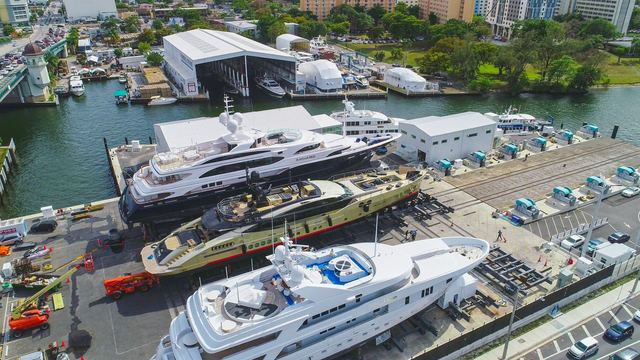
The annual-cost picture at a glance
Estimates reflecting long-standing industry practice and engineering judgement. Your real numbers vary with fleet size, local energy prices and labor rates — which is exactly why a yard-specific model beats a rule of thumb.
| Cost driver | Pearlson Shiplift | Floating Drydock | Graving Dock | Slipway |
|---|---|---|---|---|
| Capital cost | Moderate — platform, hoists, berths | High — steel hull + deep-water works | Very high — excavation & concrete | Low–moderate |
| Annual energy | Low — electric hoists only | High — ballast pumping each cycle | Very high — pumping + gate systems | Low |
| Underwater maintenance | Low — machinery mostly above water | High — corrosion, docking the dock | Moderate — gates, pumps, silt | Moderate — cradles, rails |
| Docking cycle speed | Fast — lift & transfer in minutes | Moderate | Slow — hours to flood/drain | Slow — hauling the cradle |
| Staff per docking | Small dockmaster team | Tugs + marine crew | Lock and valve crews | Dedicated hauling crew |
| Vessel throughput | High — multiple work berths | Limited — few berths | Single vessel at a time | Single vessel at a time |
| Footprint & civil works | Small — locks into shoreline | Large — protected water area | Very large — excavated basin | Small |
| Typical role | Repair/refit, naval bases, mega-yacht centers, busy harbors | Seasonal, open-water yards | Newbuild series, heavy industry | Small & shallow yards |
General guidance, not a quotation. Pearlson engineering prepares a full feasibility and OPEX model for your specific yard and fleet.
The payback logic most yards miss
An empty docking asset is a standing cost. A dock that handles 3 vessels a quarter and a dock that handles 3 vessels a week pay the same bill for wharf, pumps and crews — but spread very differently across each haul-out. Because a shiplift transfers vessels onto land and re-frees the platform, it converts a chronic cost into a throughput machine. That is why the four largest shiplifts ever built — BAE, Austal, and the Adelaide record — were all specified by yards whose business depends on volume.
Honestly: when other methods still win
No method is universally best. A graving dock is unbeatable for large newbuild series and heavy offshore fabrication. A floating drydock remains practical for open-water seasonal yards that tow between sites. A slipway is fine for small shallow-water yards and fishing fleets. The question is not "which is the biggest machine" — it is "which asset turns your specific vessel mix into the most dockings, with the least recurring cost?"
That is a calculation worth doing on paper before you spend a single pound, dirham or dollar on steel.
Get a yard-specific answer
As official agent of Pearlson Shiplift Corporation in Egypt, Global ShipYard Solution coordinates engineering feasibility studies, OPEX modelling and quotations directly with Pearlson's design office — no sales middlemen.
Request a Feasibility Study Talk to an Engineer